

I wanted to write a piece about creating styleguides and skills needed to imitate your own voice, but I think the introduction I was planning is too long and requires its own post, so here it is.
There’s been a few things popping up in my feeds about AI use in books, music, and elsewhere. I wanted to analyze them and see how it applies to my target, B2B SaaS companies.
The controversy of a French novel that didn’t pass the Pangram test
There’s been some noise on Twitter about a recently published book that sounded a bit like AI wrote it so someone used Pangram and the result was the book was AI-assisted. It’s not a random book because it already has some awards.
Whether it is AI-assisted or not isn’t a big deal for the general public, but for the ones who are passionate about literature, it is. Here’s a quote from a video of former French teacher.
Personally, I’m not the least bit interested in reading a book written by AI. Because for me, a book written by AI is a contradiction in terms insofar as it doesn’t write anything. You can’t be moved by a text produced by AI because there’s nobody behind it. No lived experience, no emotion, no desire, no despair, no effort, no story, no destiny, no struggle, no sorrow, no joy, nothing, absolutely nothing of all that explains not only literature but speech itself.
If you read books because you look for all those things from the authors, then AI is devastating to your experience. But readers of dark romance don’t care much. That’s why it’s important to differentiate literature from commercial books in that debate.
The #1 song in South Korea is made by AI
A song called “The Adult I Dreamed Of” from a Korean independent creator was released at the end of June and has been #1 on some charts.
I say some charts, because it hasn’t been on the main charts. And in K-Pop, toxic fans absolutely want their bias (i.e. favorite singer) to have a Perfect All Kill (PAK) when a new song is released, meaning achieving #1 on all the charts. Which hasn’t been possible because of this AI song.
One artist has finally achieved PAK and the comments (on /r/kpop) are livid.
Absolutely diabolical that an AI generated song almost blocked this from happening…the state of music charts in SK is starting to look bleak, and this is just the beginning.
But a lot of people don’t care about all of this and will listen to any song that they find good and is trending.
K-Pop fans like to lash out on the general public (GP), term they use for anyone who’s not a hardcore fan that I find pretty condescending. Like the GP has shit taste and fans have such a refined palate to like this or that. Well it’s all very commercial music so STFU.
Opus 5.5 is really good at generating music videos
And then over the weekend, a few videos made with Opus trended on Twitter. From product lunch videos to music videos.
Here’s one made by Anabology, a biohacker I’ve been following for years. It’s been watched by millions of people, retweeted by Elon, and shows how good AI has become.

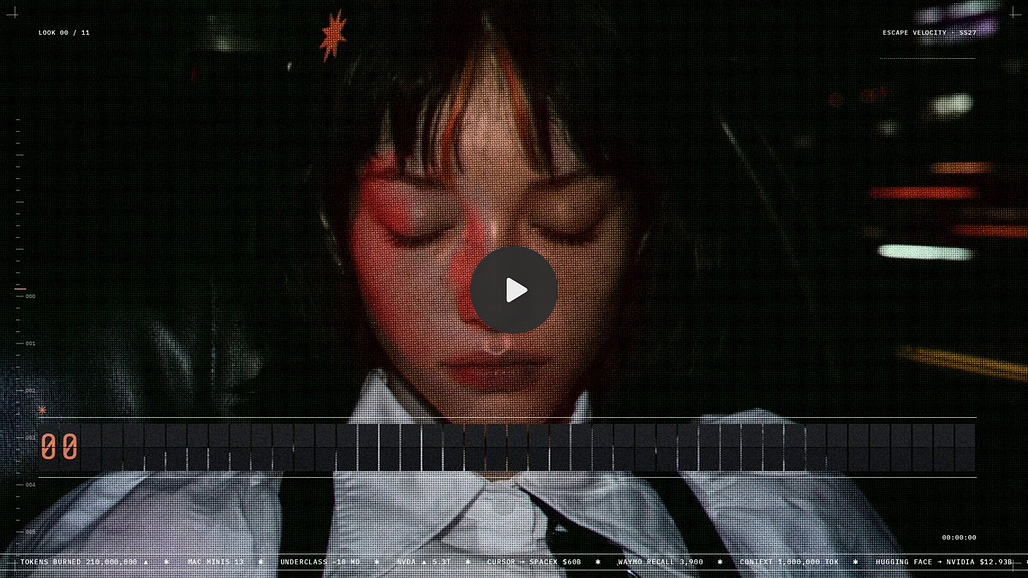

It could be interpreted as just AI fans loving the capabilities of Opus 5.5 but I think it’s good enough to be on a playlist for a lot of people.
It’s been the same with VFX & CGI
For Zack Snyder’s Justice League movie, Henry Cavill (Superman) had a reshoot at the same time he was shooting for a Mission Impossible movie and couldn’t contractually cut his mustache/beard. So the VFX team had to digitally remove the beard. I had friends who hated the bad VFX. But frankly I don’t really see anything shocking. Maybe I don’t pay attention to these things enough, or maybe my brain just ignore it or adapts to it. But I really didn’t mind the result.
Messaging is more important than your voice
People care about themselves. They want something that talks to them. But they don’t really give a shit about the emotions of the author.
Some people really care about the art itself, and if it’s your target then better not to use AI.
If your target isn’t completely full of themselves, and it’s a majority of people, then use of AI is completely fine. As long as you nail the messaging and you don’t sound like a clanker.
And that’s what I’ll explore in the next part, the various ways AI can help you nail the messaging of your B2B product.
NB: It is kind of a rant against AI haters and “purists” here and there, and I want to point out I really love to understand the emotions and processes of authors, creators, and producers. But I don’t have the bandwidth for all of the culture I consume to be like that. That’s why I’m fine with consuming good AI content.